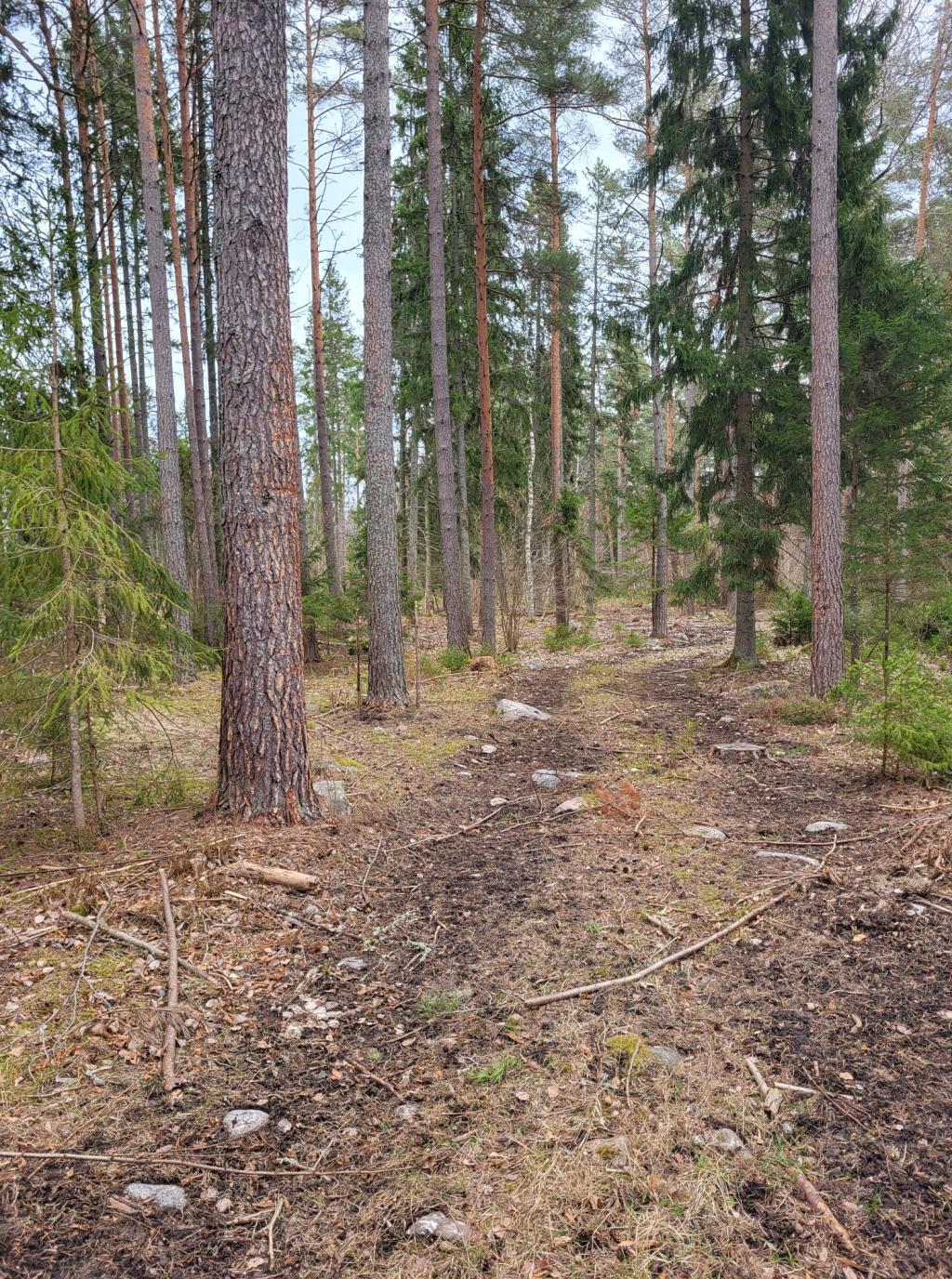
This past summer I finished my masters programme in Strategic Urban and Regional Planning at Linköping university. For my masters thesis I interviewed people who live close to and spend time in the natural areas around the Forsmark nuclear industrial site where the final repository for Sweden’s spent nuclear fuel is under construction.
My main interest in this project came from wanting to research the everyday perception of nature in relation to the nuclear industry. Is there a specific nature-nuclear sense of place in the Forsmark landscape, and does the construction of the final repository affect this sense of place? Is such a specifically nature-nuclear sense of place mirrored in planning efforts, specifically for the preservation of natural environments in this region?
Forsmark is a good place for studying the relation between the natural and nuclear realms. Except for the power plant and the repositories for long- and short-term radioactive waste, the industrial site is surrounded by a relatively rich natural landscape with endemic species, undisturbed natural habitats, and has a historic reputation as a refuge for wildlife (Öhnfeldt, 2024). It was also in Forsmark where radioactive fallout from the Chernobyl accident was first discovered outside the Soviet Union, traces of which are still present in the landscape today.
From the start of my project, I knew that I wanted to use walking interviews as my primary method. I also knew that I wanted to study the more everyday and non-sensational side of the nuclear realm. Walking interviews is a useful method not only for describing and getting to know a place on an everyday basis, it’s also a really fun and rewarding exercise in itself. I followed in the footsteps of Lee and Ingold (2006) who claim that traversing the landscape on foot makes it easier to more actively notice and reflect on the different elements in one’s surroundings and the experiences they excite. In a nature-nuclear setting, interviewing while walking is therefore an active design choice aimed at facilitating encounters with these specific elements of the environment. Such elements do not have to be particularly sensational, but can be as simple as the trees, the rocks, and the industrial infrastructure observed along the path.
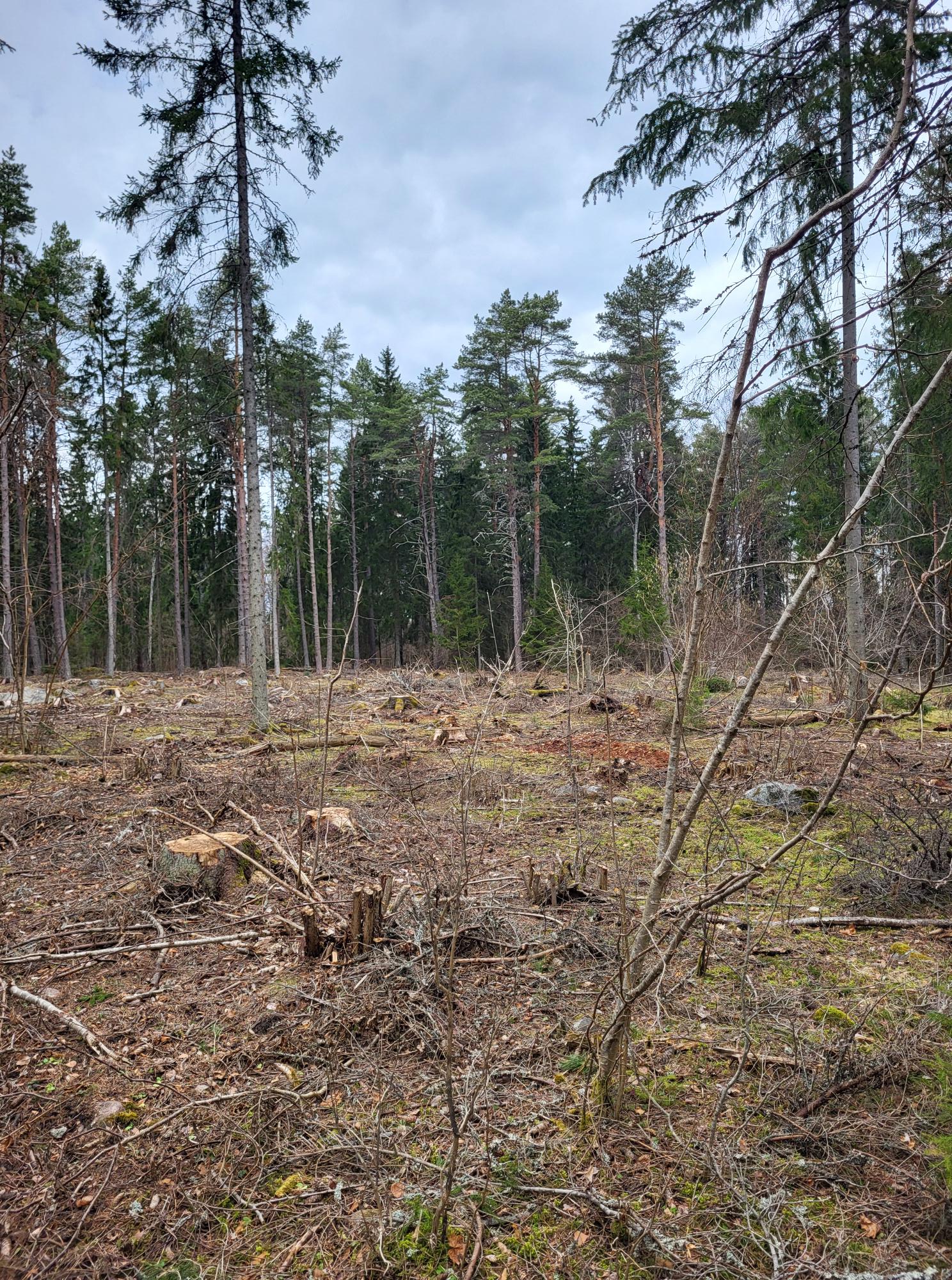
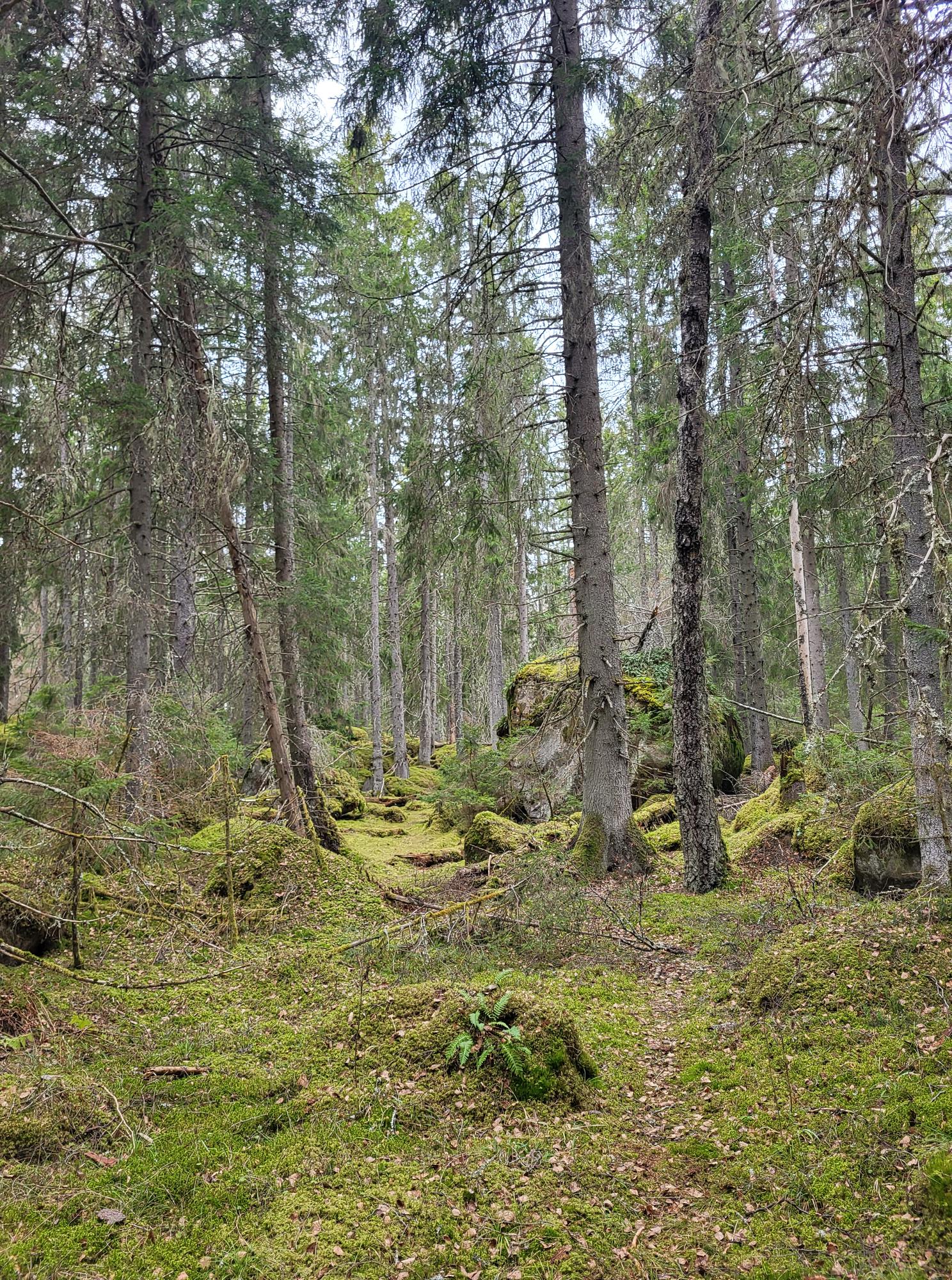
Even though I had some troubles finding participants, the people that I walked with were very friendly and contributed with great insights. Except for providing observations about their experiences from the walks, they also told stories about Forsmark, for example, memories from the Chernobyl disaster, during which one of the participants had been an employee at the power plant. Talking about the environment from the perspective of self-observation is perhaps not an everyday occurrence for many and I believe that the participants sometimes found my questions a bit perplexing. All participants were, however, excellent at describing their sensations of encountering the places we walked in; they described the Forsmark landscape as a natural, self-seeded, partially managed forest area, and as a place in which they found personal enjoyment.
All of the participants stated that the nuclear industry to a large extent did not figure in their everyday sense of place in the walked-in environments, but nuclear elements could still become spatially important when they were encountered within certain distances. These distances were more perceived than actual, for example dependent on whether the nuclear infrastructure was sighted or heard or on how close the level of radioactive fallout particles in wild game were to the recommended threshold. There thus seemed to be a conceptual separation of the nuclear and natural aspects of place which converge mainly when the nuclear presence interferes with the idea of nature as a place for personal leisure or environmental conservation. As long as the perception of the natural environment was strong, the nuclear presence was seen as negligible for the participants’ sense of place. This mirrors the idea behind the final repository itself, which is constructed to perceptually disappear from the landscape once it is sealed.

The concept of place can be understood through Torsten Hägerstrand’s (2009) idea of the fabric of existence where all individual entities in the world – called continuants – are seen to be connected in both space and time through their individual movements – called trajectories – to form an interconnected, multi-scalar spacetime web. From this perspective, places are not only made up by their constituent entities, for example different natural and nuclear elements, but also by the temporal movements of these entities. The participants were skilled in identifying processes and agents of change in the landscape by pointing out previous and expected movements of different continuants, for example the uneven regrowth of the forest or the imagined increase in construction noise and traffic around the final repository. One participant expressed this in relation to a pile of human-made debris found along the path:
“Trash should not be present in nature, that’s just how it is, but that is also a thing you can find in nearby forests, like you did previously, you buried trash, and it works itself upwards, after a while, through the layers of soil, so it emerges at the surface now.”
Despite this, the participants seemed to struggle a little in connecting the nuclear and natural realms in future visions, instead seemingly referring to their own mortality and political decisions as reasons for future uncertainty and powerlessness. From a planning perspective, the nuclear industry and the natural environment were, however, seen to affect the development of each other, in the sense that both realms were in the process of intensifying their mark on the landscape. The expansion of the nuclear industry and the expansion of conservation efforts could be seen to occur simultaneously, both supported by the absence of other kinds of societal activities.
No plans exist around what will become of the Forsmark industrial site when the power plant is eventually decommissioned, and the repository finally sealed. The findings from my walks in the area suggest that the idea of the nuclear realm is mostly absent but that it appears in certain situations and therefore constitutes a potential encounter within the landscape. This potentiality will live on as long as there are identifiable legacies of the nuclear industry which, at least in the short term, seems to have effects on the planning for natural conservation in the area. There thus seems to be some kind of a nature-nuclear sense of place in Forsmark and I would highly recommend experiencing it through a walk in the nearby natural landscape.
Niklas Hamström
References
Hägerstrand, T. (2009). Tillvaroväven. Stockholm: Formas.
Lee, J., Ingold, T. (2006). ‘Fieldwork on foot: perceiving, routing, socializing’, in S. Coleman & P. Collins (eds.) Locating the Field: Space, Place and Context in Anthropology. London: Routledge.
Öhnfeldt, R. (2024). The Forsmark ‘Nuclear’ Seals and Their Many Caretakers. The Otter–La Loutre. NiCHE: Network in Canadian History & Environment.
The thesis: Hamström, N. (2025). Encountering Embedded Potentiality: Sensing the nature-nuclear fabric of existence through walking interviews in the Forsmark landscape [masters thesis]. Linköping: Linköping University. https://liu.diva-portal.org/smash/record.jsf?pid=diva2%3A1978679&dswid=898
 Nuclear Natures
Leave a comment